And Its Historical Significance
The Corinth Canal is one of the most iconic and significant waterways in the world, connecting the Aegean Sea with the Ionian Sea. Situated in Greece, this narrow, artificial canal has played an essential role in shaping the region’s trade, economy, and history. Despite its relatively modest size, the Corinth Canal’s construction is a testament to human ingenuity and ambition, demonstrating the lengths to which civilizations will go to overcome natural geographical obstacles.
This article delves into the history, engineering marvel, and modern relevance of the Corinth Canal, answering common questions and examining its enduring legacy.
What is the Corinth Canal?
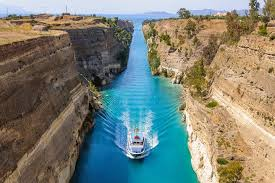
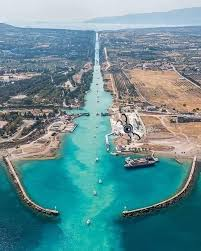
The Corinth Canal is an artificial waterway that cuts through the Peloponnese Peninsula in Greece, linking the Aegean Sea to the Ionian Sea. Spanning a length of about 6.3 kilometers (3.9 miles) and with a width of 21.4 meters (70.2 feet) at its narrowest point, it offers a shortcut for ships traveling between the two seas, saving them the time and distance of navigating around the Peloponnese Peninsula.
The canal cuts through the Isthmus of Corinth, a narrow strip of land that connects the Greek mainland to the Peloponnese. This geographical location made the canal an incredibly valuable trade route, though it was not without its challenges during construction and operation.
The Historical Background of the Corinth Canal
The Ancient Desire for a Canal
The idea of cutting through the Isthmus of Corinth to create a waterway dates back to ancient times. In fact, the concept of a canal was first proposed as early as the 7th century BCE. Ancient Greek engineer Periander, a tyrant of Corinth, is often credited with the first idea to dig a canal across the isthmus, but it was never completed. Despite this, the idea continued to circulate among engineers and rulers for centuries.
The attempt to build a canal was revisited by the Roman Emperor Nero in 67 CE. Nero famously oversaw the beginning of the project by ordering the digging of the canal, but his efforts were halted by a combination of logistical difficulties, political instability, and the emperor’s untimely death. Despite the setbacks, his ambition laid the groundwork for future attempts.
The Modern Corinth Canal: Vision and Construction
After centuries of failed attempts, the modern Corinth Canal was finally constructed in the late 19th century, thanks to the vision and determination of Greek and international engineers. In 1881, the Greek government, led by Georgios Sinas, awarded the contract to a French engineer named Louis-Philippe d’Hoffschmidt to begin serious work on the canal. The construction was plagued by numerous challenges, including financial difficulties, but ultimately, the canal was completed in 1893.
This feat was made possible through a combination of manpower, machinery, and modern engineering techniques. Workers, both Greek and foreign, toiled in difficult conditions to cut through the solid rock of the Isthmus. When the canal was finally opened, it was hailed as an engineering triumph.
Engineering Features and Construction Challenges
The Corinth Canal was an ambitious project, especially considering the tools and technology available at the time of its construction. Its completion was made possible by numerous technological innovations and methods, including:
Blasting Techniques: To carve through the rugged landscape, engineers used dynamite to break up the rock. This was a new technique in civil engineering and proved crucial in the canal’s construction.
Manual Labor: The work required the efforts of thousands of laborers, many of whom were involved in digging, blasting, and reinforcing the canal’s walls.
Financing and Delays: The canal’s construction was expensive and faced significant delays. Early plans for the canal were abandoned due to a lack of funds, and the final project was largely funded through loans from international creditors.
Despite the successful completion of the canal, it has faced challenges ever since its creation. The canal’s narrow width and shallow depth limit its ability to accommodate larger vessels, which has led to a decline in its use as a primary shipping route. As a result, the canal today serves more as a historical landmark and tourist attraction, with its original purpose of facilitating large-scale maritime trade largely obsolete.
The Importance of the Corinth Canal in Modern Times
A Strategic Maritime Route
Despite its limitations in terms of the size of ships it can accommodate, the Corinth Canal remains an essential part of global maritime navigation, especially for smaller vessels. The canal is considered a critical shortcut for ships traveling between the Aegean Sea and the Ionian Sea, saving them from having to navigate the much longer route around the Peloponnese Peninsula. This shortens the travel distance by approximately 185 nautical miles.
For Greece, the canal has remained a vital component of the country’s maritime infrastructure. Even though large tankers and container ships cannot pass through the canal, it remains an important passageway for smaller vessels, such as pleasure boats, cargo ships, and military vessels. As a result, the canal continues to contribute to Greece’s tourism and maritime industries.
A Major Tourist Attraction
In addition to its practical uses, the Corinth Canal has become a significant tourist attraction. Visitors from around the world travel to the canal to witness its breathtaking views and understand the scale of this engineering wonder. The canal’s deep, steep walls and picturesque setting make it an awe-inspiring sight for tourists, especially those interested in history, architecture, and engineering.
Boat tours along the canal are popular, and some tourists even choose to cross it via small vessels, allowing them to experience the narrow passage firsthand. The canal is also a popular spot for bungee jumping from the canal’s bridge, offering visitors a thrilling experience in one of the most unique locations in Greece.
Impact on Greek Economy
The Corinth Canal’s historical and modern significance cannot be overstated. Although it is not as heavily used as it once was due to the rise of larger, modern ports and container shipping methods, the canal still plays an important role in the Greek economy. Revenue generated from tolls paid by ships passing through, as well as income from tourism, contributes to Greece’s national income.
Environmental and Operational Challenges
Despite its historical importance, the Corinth Canal faces several operational and environmental challenges. The canal’s narrow and shallow dimensions limit its ability to accommodate modern, large cargo ships. For instance, only vessels with a maximum width of around 17 meters (55 feet) and a draft of 7.5 meters (24.6 feet) can navigate the canal, limiting its commercial viability.
Additionally, the canal’s waterway is subject to sedimentation, which often requires dredging to keep it navigable. Strong tides and seasonal weather conditions can also impact the canal’s operations. While the canal is open year-round, the challenges associated with its maintenance and operation have led to debates over whether it should be expanded or modernized to accommodate larger vessels.
Fun Facts About the Corinth Canal
Bridge Crossing: A bridge crosses over the canal at the top, offering one of the best vantage points for observing the passageway below. The bridge is often used for bungee jumping, offering a thrilling experience for adventurous tourists.
Tolls: Ships passing through the canal must pay tolls, which are calculated based on the vessel’s size and tonnage. This revenue contributes significantly to the Greek economy, even though the canal’s traffic is much lighter than other major shipping routes.
Notable Events: The canal has been the site of several important historical events, including naval exercises and military operations. It played a strategic role in various wars, particularly during the Balkan Wars and World War II.
Narrow Waterway: The canal’s narrowness is striking. In some sections, the walls of the canal rise more than 70 meters (230 feet), creating dramatic views and making it one of the most photographed locations in Greece.
Famous Failures: Despite the historic efforts to construct the canal, its construction was delayed for years due to financial and political issues. Today, however, it stands as a remarkable testament to the perseverance and ingenuity of its creators.
Why Was the Corinth Canal Built?
The Corinth Canal was built to connect the Aegean Sea with the Ionian Sea, providing a shortcut for maritime trade and travel. By cutting through the narrow Isthmus of Corinth, the canal reduced the journey time for ships that would otherwise have to navigate around the Peloponnese Peninsula.
Can Large Ships Pass Through the Corinth Canal?
No, large ships cannot pass through the Corinth Canal due to its narrow width and shallow depth. The canal is suitable for smaller vessels, such as cargo ships, passenger boats, and yachts, but modern container ships and tankers are too large to navigate the passage.
What Is the Length and Depth of the Corinth Canal?
The Corinth Canal is 6.3 kilometers (3.9 miles) long and 21.4 meters (70.2 feet) wide at its narrowest point. Its depth varies but is generally around 8 meters (26 feet), which further limits the types of vessels that can use it.
Is the Corinth Canal Still Used Today?
Yes, the Corinth Canal is still in use today, but primarily for smaller vessels. It is an important route for leisure craft, passenger ships, and certain types of commercial vessels, although its commercial traffic has declined over the years due to the development of larger ports and shipping routes.
The Corinth Canal’s Enduring Legacy
The Corinth Canal remains one of the world’s most fascinating and historically significant waterways. Though smaller and less trafficked than major global shipping lanes, its strategic location and rich history make it an important part of Greece’s maritime and cultural heritage. From its ancient conception to modern-day use, the canal’s story is one of ambition, engineering feats, and perseverance. As a monument to human ingenuity, the Corinth Canal continues to captivate both locals and visitors from around the globe.
Faqs
The Corinth Canal is one of the most famous engineering landmarks in Greece, serving as a vital link between the Aegean Sea and the Ionian Sea. This narrow canal has a fascinating history and a critical role in maritime navigation. In this FAQ, we answer some of the most commonly asked questions about the Corinth Canal, drawing from the latest available information.
What is the Corinth Canal?
The Corinth Canal is a man-made canal that cuts through the narrow Isthmus of Corinth, connecting the Aegean Sea to the Ionian Sea. The canal is about 6.4 kilometers (4 miles) long and 21.4 meters (70 feet) wide at its base. It allows ships to travel between the two seas without having to navigate around the Peloponnese Peninsula, saving time and distance.
The canal is one of Greece’s most iconic engineering feats and a major tourist attraction, although it is not frequently used for large-scale commercial shipping due to its narrow width and steep walls.
When was the Corinth Canal built?
The idea for the Corinth Canal dates back to Ancient Greece, with attempts to construct it going as far back as the 7th century BCE. However, it was not until the 19th century that the canal was finally completed.
The construction of the canal began in 1881 under the supervision of French engineer Ferdinand de Lesseps, who was also involved in the construction of the Suez Canal. The canal was officially completed in 1893, and it was opened to ships in October 1893. Despite the challenges faced during its construction, the Corinth Canal was an incredible achievement for its time.
Why is the Corinth Canal important?
The Corinth Canal is important for several reasons:
Geographical significance: The canal saves ships a long and difficult journey around the Peloponnese Peninsula. It shortens the maritime route between the Aegean and Ionian Seas, which is crucial for trade and transportation.
Historical importance: The canal has been a symbol of engineering ingenuity. It has been attempted by many civilizations throughout history, including the Romans and the ancient Greeks, who were interested in connecting the two seas.
Tourism: It is a popular tourist destination due to its unique geography and impressive engineering. Visitors can walk along the canal, take boat tours, or even bungee jump from one of the bridges crossing it.
Cultural relevance: The Corinth Canal plays an important role in the historical and economic development of Greece, especially in relation to the shipping industry.
How deep is the Corinth Canal?
The depth of the Corinth Canal varies but is generally 8 meters (26 feet) deep. This depth limits the size of ships that can pass through, meaning it is primarily used by smaller vessels, such as cargo ships, yachts, and cruise ships. Larger ships, such as oil tankers and container ships, cannot pass through the canal due to its narrow width and relatively shallow depth.
How wide is the Corinth Canal?
The width of the Corinth Canal varies along its length but averages around 21.4 meters (70 feet) at the bottom. The width at the surface can be about 25 meters (82 feet), though the steep rock walls on either side of the canal make it difficult for large ships to navigate.
Because of its narrow dimensions, the canal can only accommodate smaller vessels, and only one ship can pass through at a time in most sections.
Why isn’t the Corinth Canal used more often?
Although the Corinth Canal is a marvel of engineering, it is not heavily used by large commercial ships for several reasons:
Size limitations: As mentioned earlier, the canal’s narrow width and relatively shallow depth make it unsuitable for large ships, which dominate global shipping traffic.
Maintenance: The canal requires constant maintenance to ensure its usability, and the high cost of maintaining the infrastructure can deter frequent use.
Alternative routes: Larger ships prefer to take longer but more navigable routes around the Peloponnese Peninsula, such as traveling through the Aegean Sea and the Strait of Messina, which offers more space for vessels.
While the canal sees occasional use by smaller commercial vessels, it is more commonly used by leisure boats, cruise ships, and yachts, especially those touring the Greek coast.
What are some popular activities at the Corinth Canal?
The Corinth Canal is not only a key maritime passage but also a popular destination for tourists. Here are some activities visitors can enjoy:
Boat tours: Tourists can take guided boat tours along the canal, providing a unique perspective of the steep rock cliffs that form its walls.
Bungee jumping: The canal is a popular spot for bungee jumping, with the high bridge over the canal providing an exciting experience for thrill-seekers.
Sightseeing: Visitors can walk along the canal, take photos, and learn about the history of the site through various informational displays.
Cycling and hiking: There are several paths around the canal suitable for hiking and cycling, allowing visitors to explore the surrounding landscape.
Can you cross the Corinth Canal by car?
Yes, you can cross the Corinth Canal by car, as there is a bridge that spans the canal, known as the Corinth Canal Bridge. This bridge provides a way for cars, trucks, and pedestrians to travel between the Peloponnese and mainland Greece. The bridge offers stunning views of the canal below, and many visitors stop to take photos or simply admire the engineering feat.
What is the history of the Corinth Canal?
The idea of the Corinth Canal dates back to the ancient Greeks, who first envisioned a canal cutting across the Isthmus of Corinth to connect the Aegean Sea and the Ionian Sea. The most famous ancient effort was under the rule of Emperor Nero in 67 CE, who began the canal’s construction but was ultimately unsuccessful. Although Nero ordered the digging of the canal, the project was abandoned after his death, and the work was never completed.
For centuries, the idea of the canal remained dormant. In the late 19th century, efforts to construct the canal resumed with the support of French engineer Ferdinand de Lesseps, who had previously overseen the construction of the Suez Canal. The canal’s construction took over a decade and faced many challenges, including financial difficulties, labor issues, and technical obstacles. Despite these challenges, the Corinth Canal was completed and opened to shipping in 1893.
Is the Corinth Canal still in use today?
Yes, the Corinth Canal is still in use today, though its usage is not as high as it was initially intended. It remains an important feature of Greece’s maritime infrastructure, primarily serving smaller commercial vessels, cruise ships, and yachts. The canal also plays an important role in tourism, attracting visitors who come to admire its engineering and historical significance.
However, larger vessels no longer use the canal due to the limitations in size, and many ships prefer alternative routes.
What is the future of the Corinth Canal?
The future of the Corinth Canal remains uncertain. While it remains a crucial historical landmark and plays a role in tourism, the limitations on its size mean that it will likely continue to serve primarily leisure vessels and smaller commercial ships. There have been discussions about potential upgrades to the canal to accommodate larger vessels, but such projects would require significant financial investment and engineering solutions.
The canal also faces challenges related to erosion, landslides, and maintenance, all of which affect its long-term viability. Despite these challenges, the Corinth Canal remains an important part of Greek maritime heritage.
Where is the Corinth Canal located?
The Corinth Canal is located in Greece, specifically between the Peloponnese Peninsula and the mainland of Greece. It lies near the city of Corinth, approximately 80 kilometers (50 miles) west of Athens. The canal cuts through the Isthmus of Corinth, providing a shortcut between the Aegean Sea and the Ionian Sea.
The nearest town to the canal is Loutraki, a popular resort area, which offers easy access to the canal for tourists.
The Corinth Canal is a remarkable feat of engineering with a rich history, offering a vital link between two major seas. Although it is not as widely used by large commercial ships due to its size limitations, the canal continues to attract tourists and remains an essential part of Greece’s maritime heritage. Whether you’re interested in its historical significance, looking to explore the surrounding area, or simply marveling at its beauty, the Corinth Canal is an iconic landmark that has stood the test of time.
To read more click here
Leave a Reply